
Peptide Reconstitution Troubleshooting: Cloudy, Foaming, Won't Dissolve
For laboratory research use only. Not for human or veterinary use.
Most reconstitution problems come from a small number of causes, and most are avoidable. Here's how to diagnose what you're looking at.
The solution is cloudy or hazy
Most likely cause: agitation. Shaking a peptide vial denatures the molecule and produces a cloudy or opalescent suspension. Once denatured, it doesn't recover — swirling afterwards won't clear it.
Other causes worth ruling out:
- Wrong solvent for the compound. A minority of peptides are poorly soluble in plain water and specify a different solvent. Check the specification before assuming a fault.
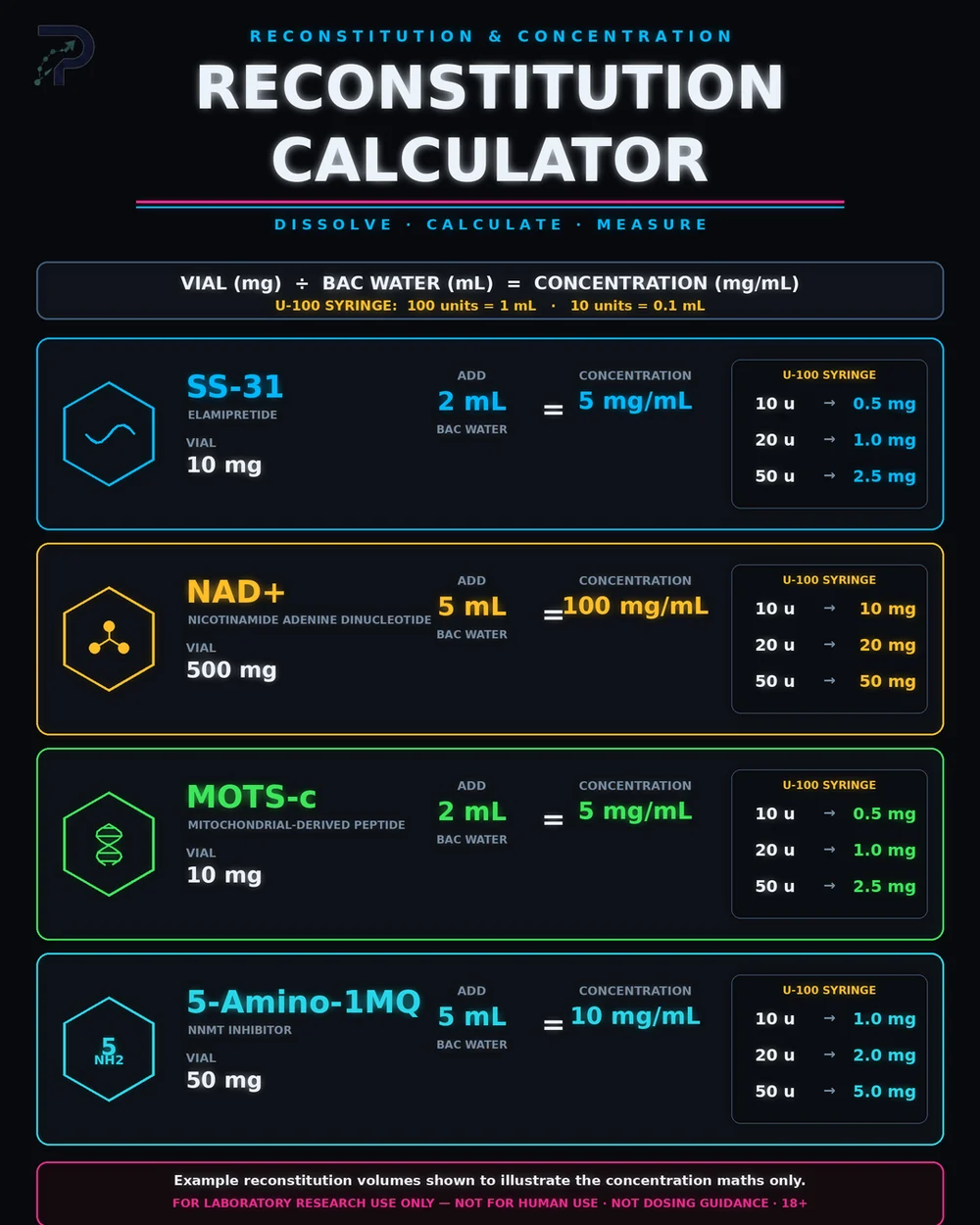
- Concentration too high. Every peptide has a solubility limit. Forcing 20mg into 0.5ml may simply exceed it. Add more solvent and re-assess.
- Temperature shock. Cold solvent straight from the fridge into cold powder slows dissolution and can cause temporary haze. Allow both to reach room temperature first.
- Degraded material. If the vial has been through freeze-thaw cycles or stored warm, cloudiness may indicate the peptide has already broken down.
What to do: if it's persistently cloudy after gentle swirling and adequate time, discard it. A cloudy solution is not usable material and no amount of further handling will fix it.
The solution is foaming
Cause: solvent hitting the powder directly, or agitation.
Peptides are surface-active. Introducing solvent at speed onto dry powder, or shaking, creates foam. Foam means peptide molecules are unfolding at the air-liquid interface — you're losing material.
Prevention: angle the vial and run the solvent slowly down the inside glass wall so it pools beneath the powder and dissolves it from below. Never inject straight onto the cake.
If it's already foaming: stop, set the vial upright and leave it. Most foam collapses within a few minutes. Assess clarity once it's settled.
Powder won't dissolve
Give it time first. Some compounds take several minutes with periodic gentle swirling. Impatience is the most common cause of "it won't dissolve."
Then work through:
- Not enough solvent — you may be under the solubility threshold. Add incrementally.
- Temperature — room temperature dissolves faster than cold. Never apply direct heat.
- Solvent mismatch — a small number of peptides require acetic acid water rather than bacteriostatic or sterile water. Check the specification.
- Powder stuck under the stopper — lyophilised cake sometimes lodges at the top of the vial or on the stopper. Tilt and rotate gently so solvent reaches it.
There are visible particles
Distinguish two things.
Fibres or specks that were there before reconstitution are usually cosmetic — small fragments of lyophilised cake that haven't yet dissolved. Give them time.
Particulates that form after dissolution, or anything that looks crystalline or stringy, suggests precipitation or contamination. Discard.
The vial looks empty
This is normal and catches people out constantly.
Lyophilised peptide is white, extremely light, and often forms a thin film on the vial wall or base rather than a visible cake. A 5mg quantity can be almost invisible against clear glass.
Before assuming a supplier error: hold the vial to the light at an angle, and check the stopper. In the overwhelming majority of cases the material is there. Reconstitute and see whether it goes into solution.
Colour that isn't expected
Most peptides give a colourless solution. Exceptions:
- Copper peptides — blue, from the copper complex. Expected. See our copper peptide guide.
- Some compounds — a faint yellow tint that is documented for that peptide.
Unexpected colour, particularly brown, or a shift in colour over time, indicates oxidation or degradation. Discard.
Prevention checklist
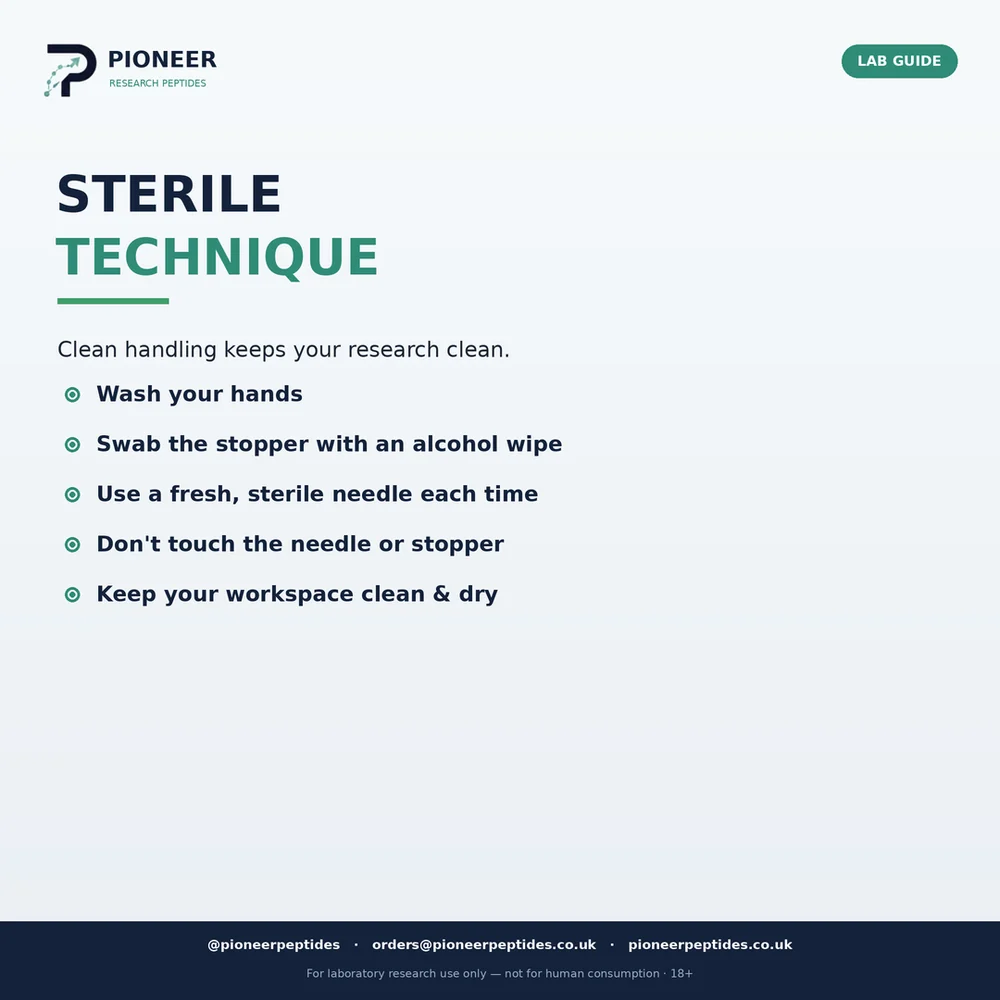
Nearly all of the above is avoided by five habits:
- Let vials reach room temperature before starting
- Swab both stoppers with alcohol and let them dry
- Run solvent down the vial wall, never onto the powder
- Swirl or roll gently — never shake, never vortex
- Refrigerate promptly and protect from light
Full method in the reconstitution guide; solvent selection in the water guide; post-reconstitution handling in the storage guide.
Pioneer Research Peptides — UK supplier of research peptides for laboratory use. Independently tested by batch, certificates published with verification keys at the COA library.
For laboratory research use only — not for human consumption. 18+.
Research-grade peptides, documented
Every Pioneer compound is Independently batch tested, with a batch-specific Certificate of Analysis available on request.