How to reconstitute
A simple step-by-step for preparing lyophilised peptides in the laboratory. For research use only — not for human consumption. Or use the reconstitution calculator to get the concentration, the draw volume and the syringe units straight off.
Work out your concentration#
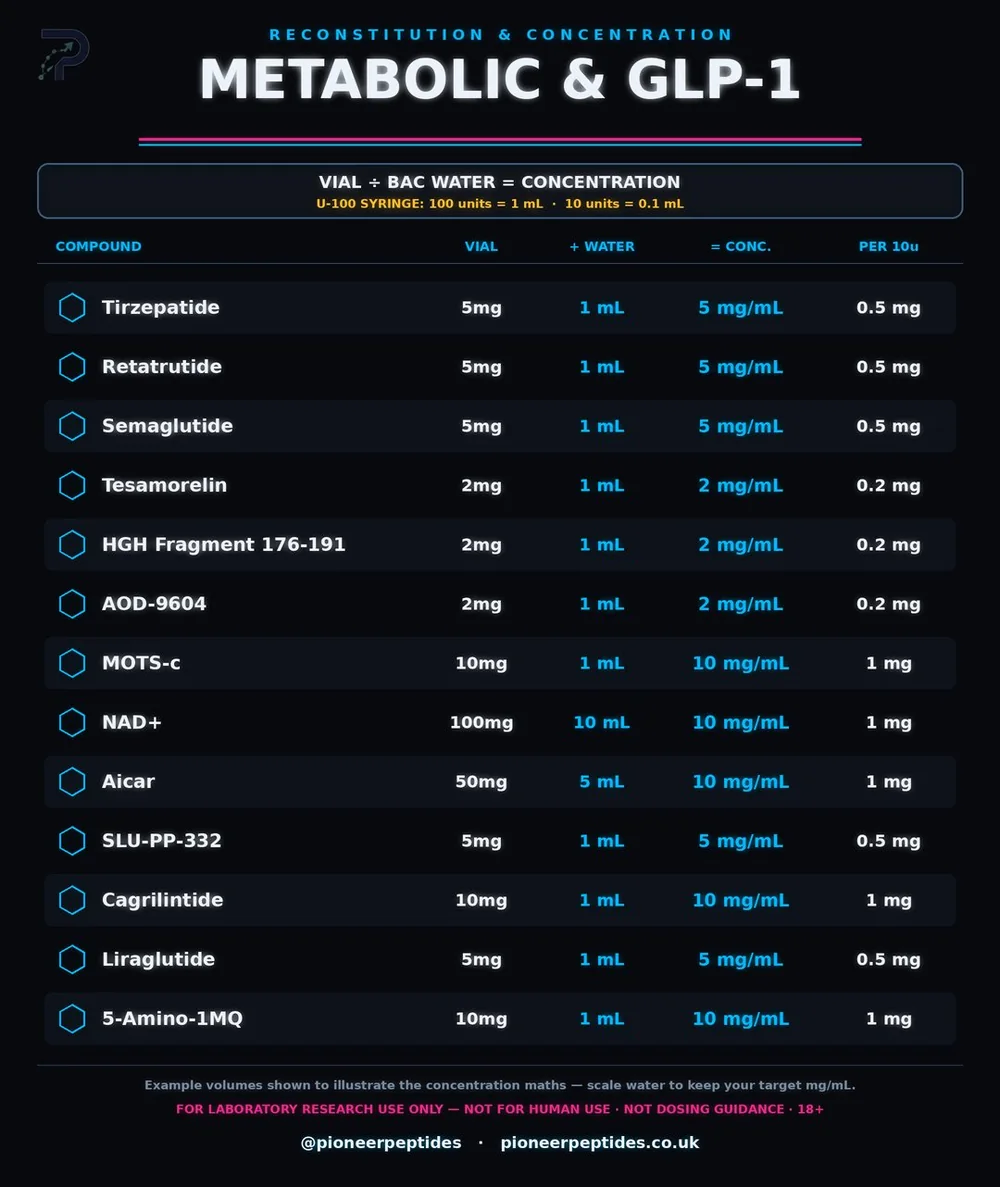
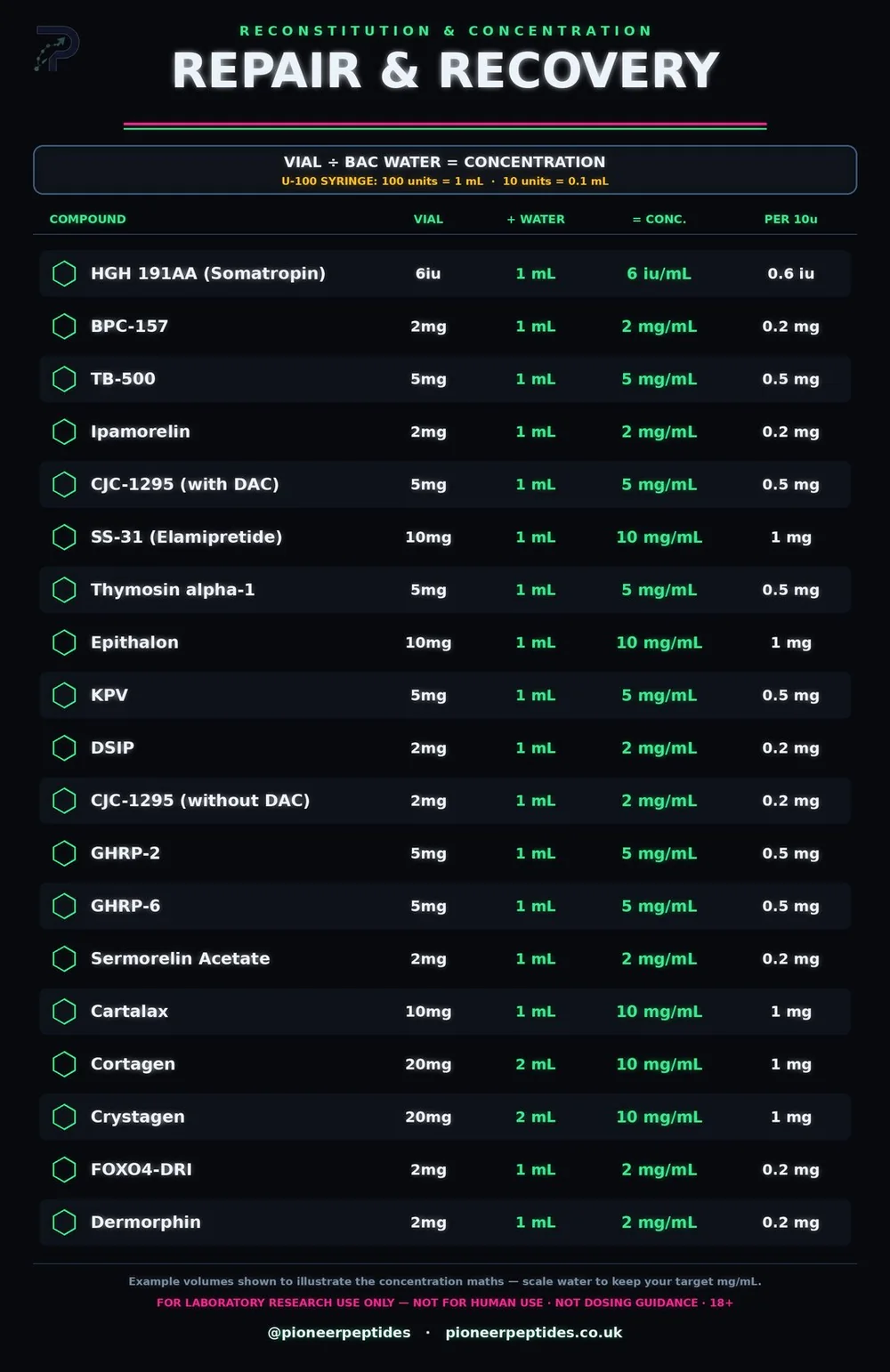
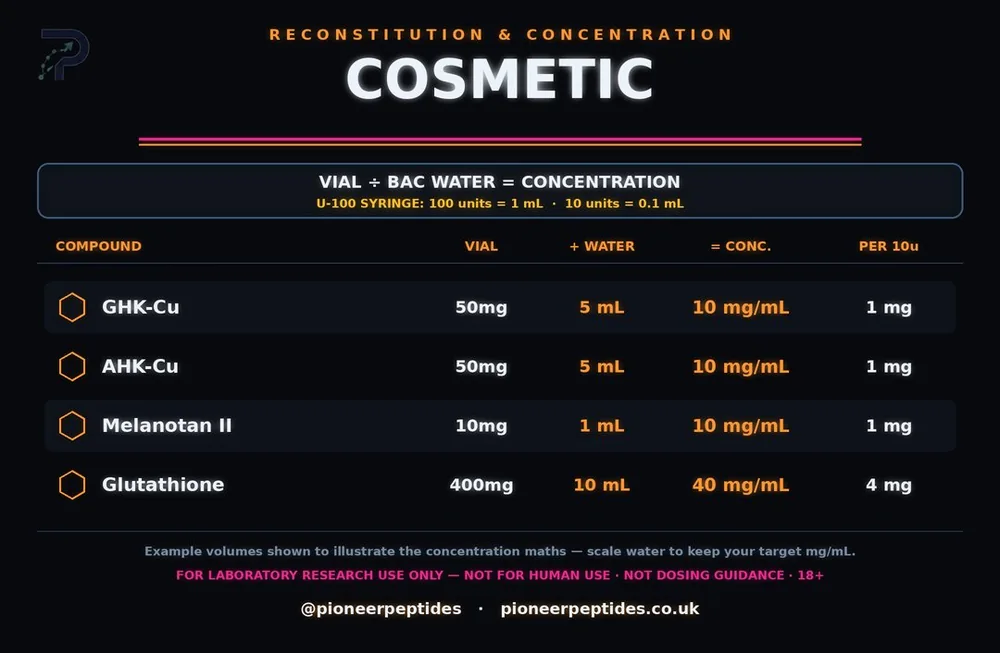
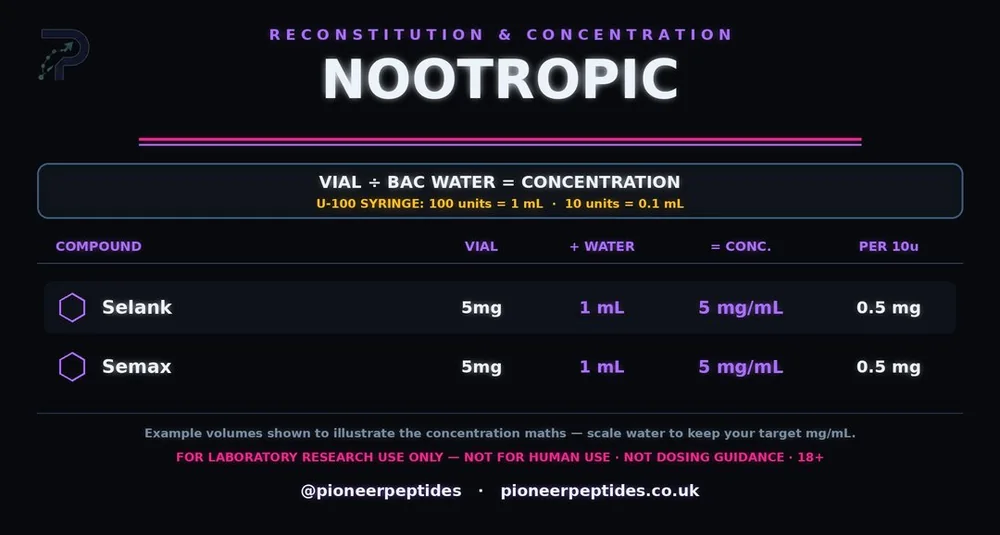
Enter the three numbers and the concentration, the draw volume and the syringe units fall out of them. Milligrams or International Units, whichever your vial is labelled in. It performs arithmetic on figures you type. It is not guidance on what to prepare or why. There is a fuller version, with the maths written out, on the reconstitution calculator page.
A standard U-100 insulin syringe is marked 0–100 units across 1 ml, so 1 unit is 0.01 ml. That is the conversion used above. Check the barrel: U-40 and 0.5 ml syringes are marked differently and the unit figure will not transfer.
Switching the vial to IU switches the draw to IU with it. It does not convert between the two: how many International Units a milligram comes to depends on the substance, and for some there is no mass equivalent at all. Use whichever unit is printed on your vial, for both boxes.
Prepare your area
Wash your hands thoroughly and clean your work surface. Work in a clean, draught-free space.
Sanitise the stoppers
Wipe the rubber stoppers of both the peptide vial and the bacteriostatic water with an alcohol swab, and let them air-dry.
Draw bacteriostatic water
Pull air into the syringe equal to the water you'll draw, inject it into the water vial, then invert and slowly draw your measured volume (e.g. 2 mL for a 20 mg vial).
Add water to the peptide
Insert the needle into the peptide vial and run the water slowly down the inside glass wall — never directly onto the powder. This prevents foaming and protects the peptide.
Dissolve gently
Do NOT shake. Gently swirl or roll the vial; most peptides dissolve within a few minutes. Avoid heat and direct sunlight.
Store correctly
Keep the reconstituted vial refrigerated (2–8 °C) and protected from light. Discard if the solution is cloudy, discoloured or contains particles.
Calculate concentration
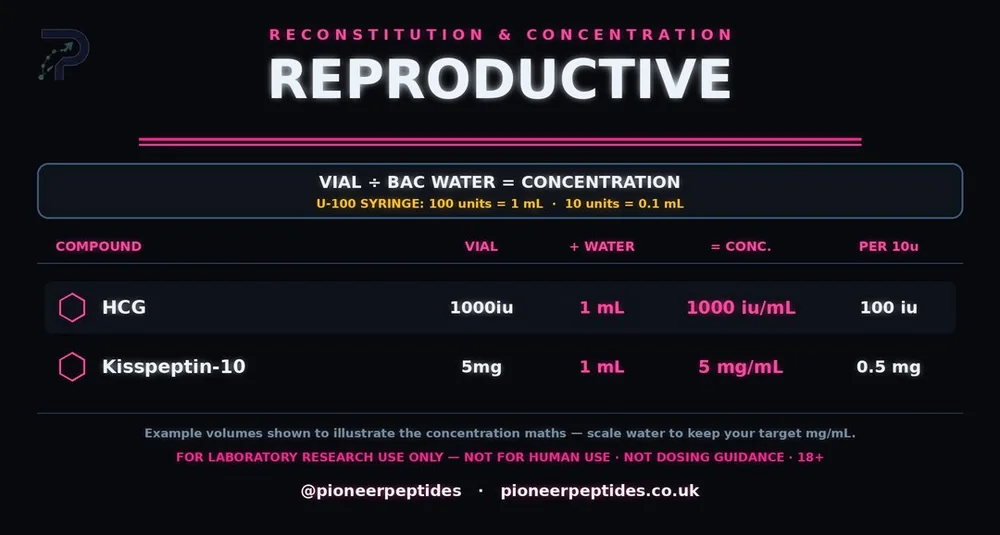
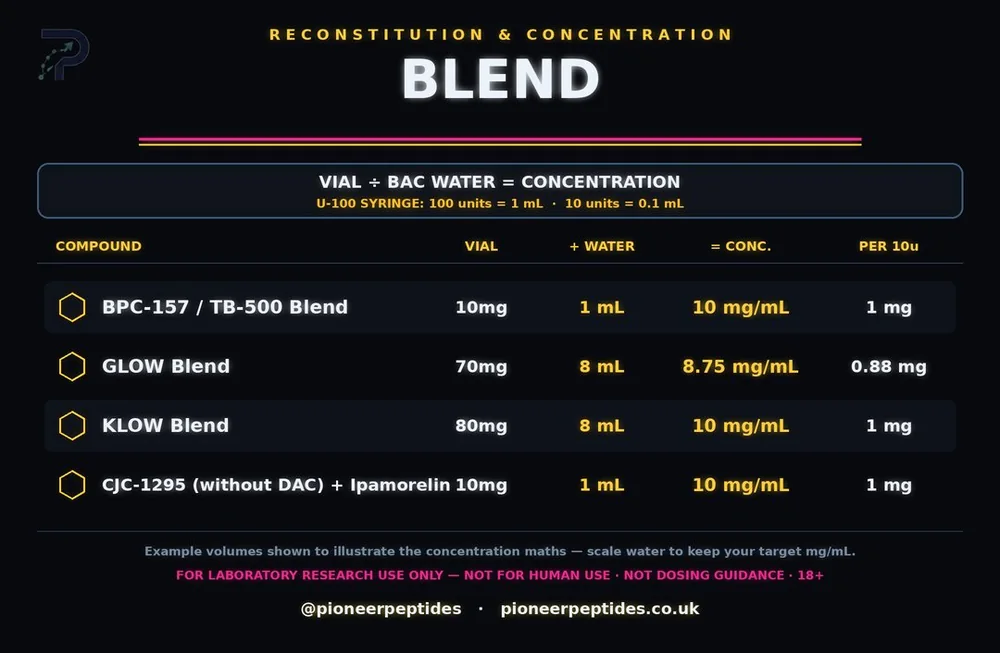
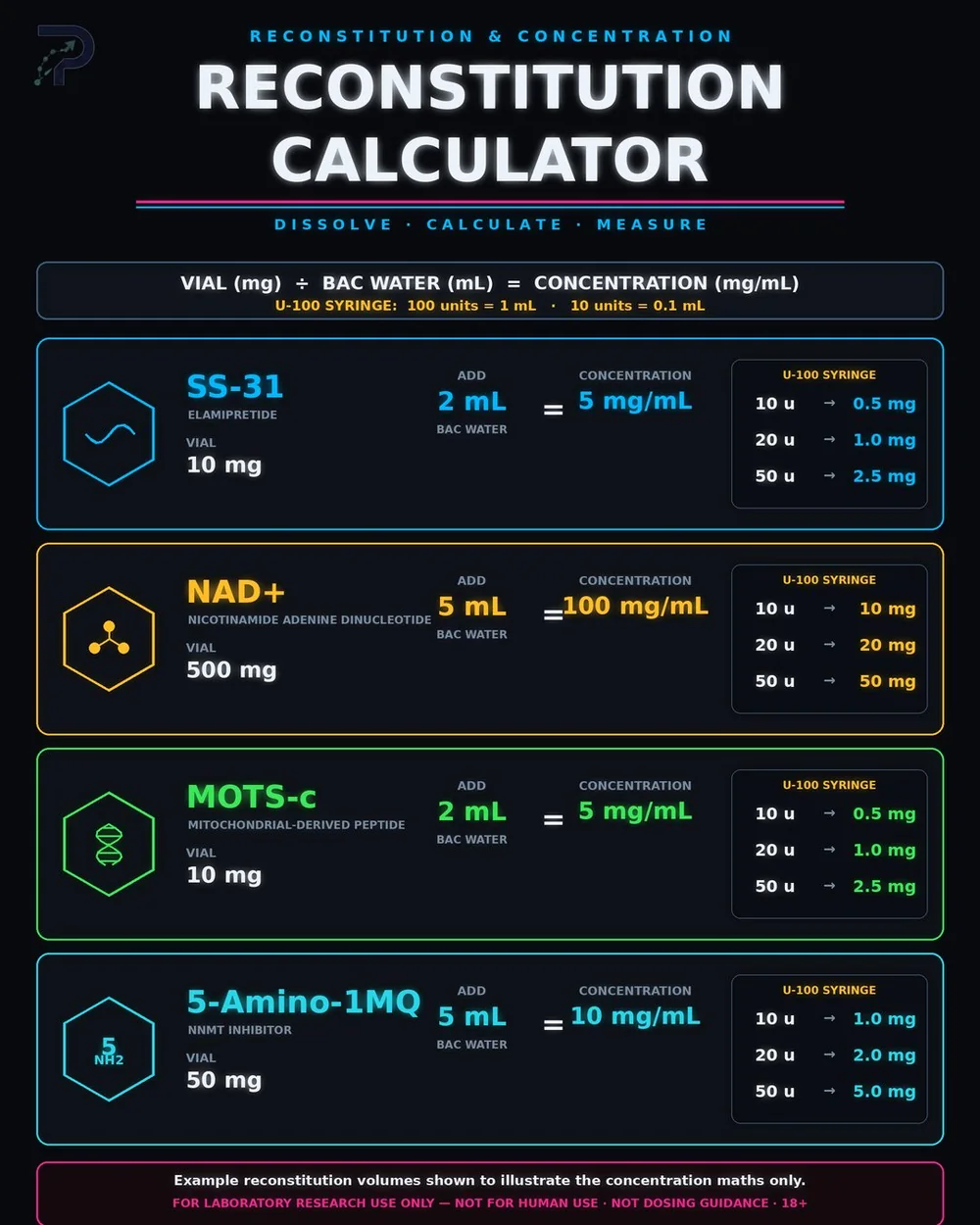
Concentration = total peptide (mg) ÷ total water (mL).
So 1 mL = 10 mg, and 0.1 mL = 1 mg.
Important notes
- ✓ Use sterile technique throughout.
- ✓ Always reconstitute with bacteriostatic or sterile water — never tap water.
- ✓ Store reconstituted vials refrigerated and respect each peptide's stability window.
- ✓ Discard if cloudy, discoloured or containing particles.
- ✓ A Certificate of Analysis is available on request.
Reconstitution & concentration calculator#
Calculators by research area#